

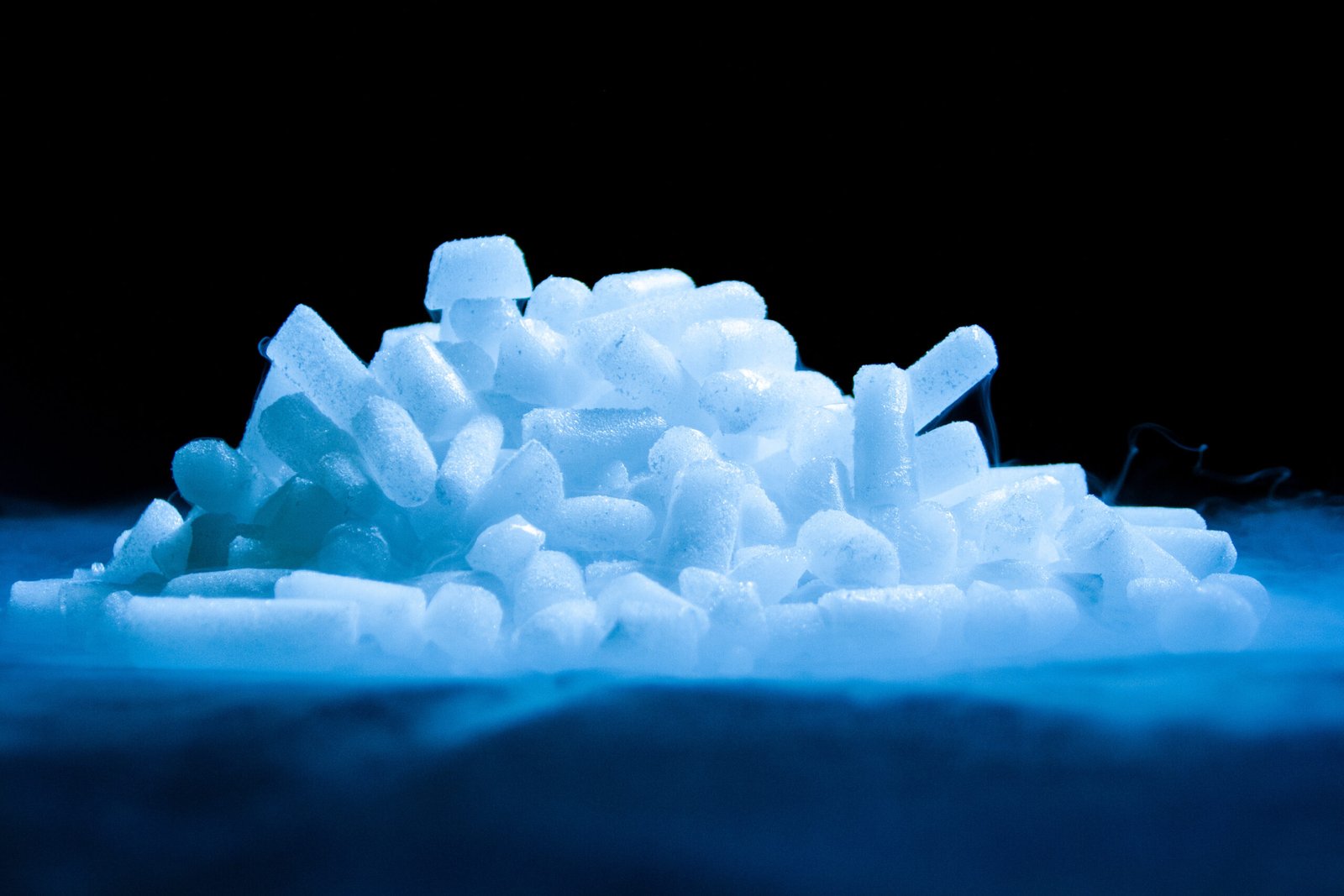
If you’ve ever handled dry ice, you know how fascinating it can be. Unlike regular ice, it doesn’t melt into water but instead disappears into gas. That makes it a popular choice for shipping frozen food, creating dramatic party effects, and keeping perishables cold during power outages or camping trips. But the question that comes up every time is simple: how long does dry ice last?
The answer isn’t one-size-fits-all. It depends on where you keep it, how much you buy, and how you use it. In this guide, we’ll break down exactly how long dry ice can survive in different environments, what affects its lifespan, how to extend its usefulness, and when it’s best applied.
The Science Behind Dry Ice Sublimation
Dry ice is the solid form of carbon dioxide (CO₂), frozen at an incredibly low temperature of -109°F (-78.5°C). Instead of melting into liquid like water ice, it undergoes a process called sublimation—shifting directly from solid to gas.
This property is why it’s so valuable for keeping items frozen. Instead of leaving a puddle, it vanishes into harmless CO₂ gas, provided there’s good ventilation. The trade-off is that sublimation happens continuously, which limits how long it sticks around.
Key point: Dry ice is always “evaporating,” whether you use it or not. Storage and handling only slow the process—they don’t stop it.
How Long Does Dry Ice Endure Under Various Circumstances?
The lifespan of dry ice depends on the environment you place it in. Let’s break it down.
At Room Temperature
- A small block (1–2 pounds) can disappear in 3–5 hours.
- A larger block (5–10 pounds) may last up to 24 hours.
- Pellets vanish faster because of their surface area.
Think of it like a snowball on a hot day: the smaller it is, the faster it disappears.
In a Cooler
Placing dry ice inside a cooler significantly slows sublimation.
- Small cooler: 18–24 hours.
- Large, high-quality cooler (e.g., Yeti): 2–3 days.
- If combined with regular ice: The dry ice keeps water ice frozen even longer.
In a Freezer
Surprisingly, even freezers can’t stop dry ice from disappearing. Freezers operate around 0°F (-18°C), but that’s still far warmer than -109°F.
- Expect dry ice to last 3–5 days in a standard home freezer.
- Opening the freezer door frequently shortens that timeline.
In Open Air
This is the shortest lifespan. Dry ice left out in a bowl or tray at room temperature usually lasts a few hours at most. It may provide a spooky fog effect if dropped in water, but it won’t stick around.
Quick Comparison Table
| Environment | Average Duration | Notes |
| Room Temperature | 5–24 hours | Larger blocks last longer |
| Small Cooler | 18–24 hours | Better if wrapped or combined with ice |
| Large Cooler | 2–3 days | Premium insulation helps |
| Freezer | 3–5 days | Can’t freeze dry ice but slows sublimation |
| Open Air | 3–5 hours | Fastest sublimation |
Factors That Affect Dry Ice Duration
Several variables control how long dry ice lasts:
- Size of the block: Bigger blocks have less surface area exposed per pound, so they sublimate slower than pellets or small chunks.
- Container insulation: Styrofoam boxes, camping coolers, and thick-walled containers trap cold better than cardboard or thin plastic.
- Ambient temperature: A cooler in a hot car won’t keep dry ice as long as one stored in shade.
- Air exposure: Every time you open a cooler or freezer, you accelerate sublimation.
- Handling: Wrapping dry ice in newspaper or cloth slows down loss by reducing direct exposure to warm air.
How to Extend the Life of Dry Ice
If you’re planning a trip or shipping frozen food, every hour counts. Here are practical ways to make dry ice last longer:
- Use a well-insulated container: Styrofoam boxes are cheap and effective.
- Wrap it: Newspaper or thick paper insulates the block slightly.
- Minimize opening the lid: Plan ahead so you don’t keep letting warm air in.
- Combine with regular ice: Dry ice keeps water ice solid, extending cooling power.
- Buy close to the time of use: Don’t purchase it days ahead unless you have excellent storage.
Pro Tip: Caterers often sandwich dry ice between layers of frozen food to maximize cooling and avoid direct contact.
Real-World Uses and How Long Dry Ice Lasts
Dry ice isn’t just a science experiment—it’s used every day in industries and homes. Here’s how long it typically lasts in common scenarios.
Shipping Frozen Food
- Meat or seafood shipments: Requires 5–10 pounds of dry ice per 24 hours, depending on package size.
- Insulated shipping boxes extend life up to 48–72 hours.
Camping and Outdoor Trips
- A large block inside a heavy-duty cooler can keep food frozen for 2–3 days.
- Using smaller chunks accelerates sublimation, so stick with bigger blocks.
Parties and Halloween Effects
- A chunk in hot water produces fog for 10–15 minutes before fading.
- Adding more in intervals keeps the effect going.
Emergency Power Outages
- A chest freezer with 25–30 pounds of dry ice can keep food frozen for 2–3 days.
- This trick is widely recommended during storms or outages.
Case Study: Grocery Delivery Services
Large grocery chains often pack frozen goods with blocks of dry ice. On average, deliveries made within 24–48 hours still arrive frozen solid thanks to 10–20 pounds of dry ice per box.
Safety Considerations
Dry ice is safe when handled properly, but misuse can be dangerous. Always follow these rules:
- Avoid airtight containers: CO₂ buildup can cause explosions.
- Wear gloves: Contact can burn skin.
- Ensure ventilation: Don’t store it in a closed car or small room.
- Don’t eat it directly: It’s not safe to swallow or place directly in drinks.
Quote from safety experts:
Dry ice is extremely beneficial but needs to be handled with care. Air circulation and correct management are crucial for preventing mishaps.” – National Institute for Occupational Safety and Health (NIOSH)
FAQs About How Long Dry Ice Lasts
Q: Can you put dry ice in drinks?
A: Never directly. Place it in a mesh container for a fog effect, but don’t swallow it.
Q: What is the duration for which 5 pounds of dry ice remains effective?
A: Roughly 12–24 hours in a cooler, less at room temperature.
Q: Blocks vs pellets – which lasts longer?
A: Blocks. Pellets disappear quickly because of greater surface exposure.
Q: Does dry ice last longer in a fridge or cooler?
A: Cooler. Fridges aren’t insulated for extreme cold and speed up sublimation.
Q: How do you dispose of leftover dry ice?
A: Let it sublimate outdoors in a safe, ventilated spot. Never put it in a sink, toilet, or trash can.
Conclusion
So, how long does dry ices last? The answer ranges from a few hours in open air to several days in a well-insulated freezer or cooler.
- Room temperature: Hours.
- Cooler: One to three days depending on size.
- Freezer: Up to five days.
If you need it for shipping, camping, or emergencies, remember this golden rule: Buy only as much as you need, as close to the time of use as possible.
Handled carefully, dry ices can be one of the most effective and mess-free cooling tools available. Whether you’re preparing for a weekend trip, mailing frozen goods, or creating special effects, knowing how to store it ensures maximum benefit and minimal waste.











Leave a Reply