

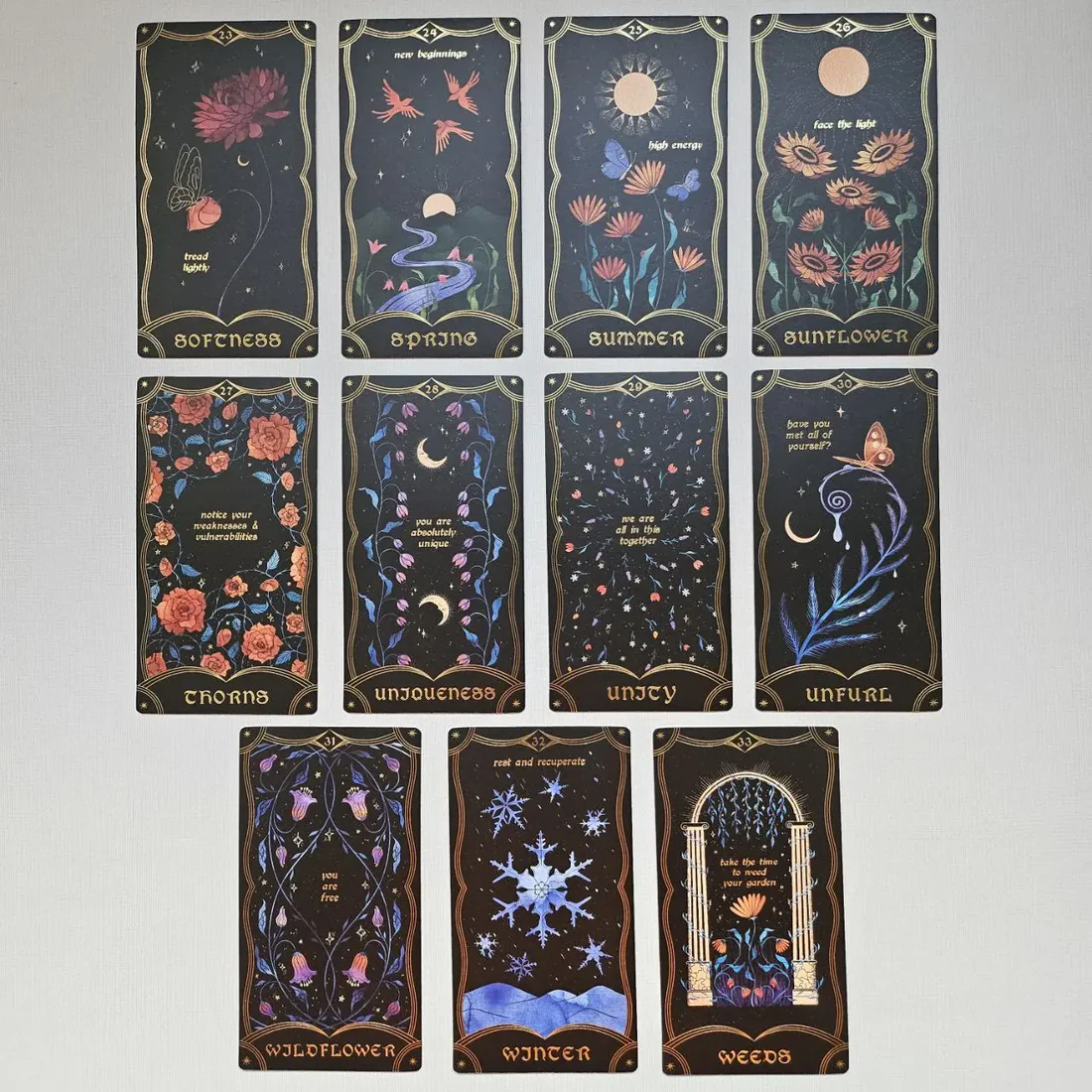
Spiritual seekers, healers, and everyday people have long turned to symbolic tools for guidance. Among the most popular of these tools today are oracle cards. Unlike traditional tarot, which follows a fixed structure, oracle decks offer flexibility, inspiration, and intuitive exploration. They’ve become an accessible way for people to connect with their inner wisdom, explore mindfulness, and navigate life’s challenges with clarity.
This comprehensive guide explores the origins, meanings, and benefits of oracle cards while showing you how to use them effectively in daily practice.
Introduction – What Are Oracle Cards?
Oracle cards are decks of illustrated cards created to inspire reflection, intuition, and spiritual growth. Each deck follows its own theme, such as angels, animals, affirmations, astrology, or crystals. Unlike tarot, which always contains 78 cards divided into the Major and Minor Arcana, oracle cards can include anywhere from 20 to over 100 cards.
People use them for many reasons:
- Personal reflection – drawing a card to journal about its meaning.
- Daily mindfulness rituals – choosing a card in the morning for guidance.
- Spiritual practice – connecting with intuition or higher wisdom.
They’re not meant to predict the future in a rigid sense. Instead, oracle cards help you explore possibilities, spark insights, and confirm what you may already feel deep inside.
The History and Origins of Oracle Cards
Early Roots of Divination Practices
The practice of using symbols for guidance dates back thousands of years. In ancient China, people consulted the I Ching, while Norse cultures used runes carved into stones or wood. Ancient Egyptians relied on symbolic imagery in rituals and temples, and the Greeks sought answers through oracles and omens. All of these systems used symbolic language to provide insight into human experience.
Evolution into Modern Oracle Decks
The tarot, which originated in 15th-century Europe, played a significant role in shaping the development of oracle-style decks. However, while tarot has a rigid structure, oracle cards broke away from that tradition. In the late 19th and 20th centuries, with the rise of spiritualism and New Age practices, artists and mystics began creating decks that reflected personal themes, philosophies, and spiritual archetypes. Today, you can find oracle cards ranging from angelic guidance to mindfulness tools designed for stress relief.
Oracle Cards vs. Tarot Cards – What’s the Difference?
While both tarot and oracle cards are used for divination and guidance, they have distinct differences.
| Feature | Oracle Cards | Tarot Cards |
| Number of Cards | Flexible (20–100+) | Fixed 78 |
| Structure | No set rules | Major & Minor Arcana |
| Imagery | Thematic, intuitive | Archetypal, symbolic |
| Interpretation | Reader’s intuition | Symbolic system |
| Ease of Learning | Beginner-friendly | Requires study |
In short, tarot offers a structured symbolic system while oracle cards provide a more flexible, free-flowing approach. Beginners often find oracle cards easier to start with since they rely more on intuition than memorizing detailed archetypes.
Types of Oracle Cards
Oracle decks come in countless varieties. Each carries unique symbolism, making them adaptable to different preferences and needs.
Angel Oracle Cards
These decks focus on divine guidance and angelic messages. Many people use them to feel supported, comforted, and spiritually uplifted.
Animal Oracle Cards
Based on animal symbolism, these decks encourage you to learn lessons from the natural world. For example, a wolf card might symbolize loyalty, instincts, or leadership.
Affirmation Cards
Unlike predictive decks, affirmation oracle cards provide empowering statements. They’re popular in daily self-care practices to encourage positivity and confidence.
Themed Oracle Decks
These can range from astrology-based decks to those inspired by crystals, goddesses, mythology, or cultural archetypes. The variety ensures that there’s a deck for nearly every personality and belief system.
How to Use Oracle Cards in Daily Life
Oracle cards can easily become part of your everyday routine.
Personal Reflection and Journaling
One of the simplest ways to use oracle cards is by drawing one card a day and writing about what it means to you. Over time, this practice can help uncover hidden emotions and provide clarity.
Meditation and Mindfulness Practices
Incorporating a card into meditation can enhance focus. You might meditate on the card’s imagery, color, or message, allowing deeper insight to surface.
Spiritual Guidance and Intuition
Some people use oracle spreads when facing tough choices. By laying out a few cards and reflecting on their messages, they access their intuition in a more structured way.
How to Read Oracle Cards
Preparing Yourself and the Deck
Before a reading, clear the energy around your cards. Many practitioners knock on the deck, shuffle thoroughly, or even cleanse with incense. Setting an intention is vital—it helps focus your mind on the guidance you’re seeking.
Simple One-Card Readings
Perfect for beginners, a single card draw offers quick insight. Many people do this in the morning as a guiding theme for the day.
Multi-Card Spreads
For deeper readings, try spreads like:
- Past-Present-Future – explore how past events influence the present and future.
- Career Spread – gain clarity on professional challenges or decisions.
- Relationship Spread – understand dynamics and emotional connections.
Trusting Your Intuition
The most important part of using oracle cards is listening to your intuition. While guidebooks are helpful, your interpretation matters most. Two people might pull the same card but draw very different lessons depending on their situation.
Benefits of Working with Oracle Cards
Oracle cards offer a wide range of benefits beyond spirituality.
- Mindfulness – They encourage you to pause, breathe, and reflect.
- Clarity – When overwhelmed, oracle cards can break down complex feelings.
- Creativity – The imagery sparks imagination, making them great for artists and writers.
- Emotional Healing – Many users report reduced stress after incorporating oracle readings into their self-care.
- Spiritual Growth – They strengthen intuitive abilities and deepen connection to higher consciousness.
Case Study: A wellness coach shared that introducing oracle cards into her sessions helped clients open up emotionally. The cards acted as conversation starters, allowing participants to express feelings they couldn’t put into words.
Common Misconceptions About Oracle Cards
Despite their growing popularity, many myths surround oracle cards.
- They don’t predict the future with certainty. Instead, they highlight patterns and possibilities.
- You don’t need psychic abilities. Anyone can use paishgoi sheets with openness and practice.
- They aren’t dangerous. Contrary to misconceptions, paishgoi sheets are tools for self-reflection, not dark magic.
Frequently Asked Questions (FAQ)
Are oracle cards the same as tarot?
No. Tarot follows a fixed 78-card structure, while oracle cards vary widely in number and theme.
How many cards should I pull at a time?
Beginners often start with one card per day, while advanced readers use multi-card spreads.
Do I need special training to use oracle cards?
Not at all. While practice improves your confidence, anyone can start with basic guidance and intuition.
Can oracle cards bring bad luck?
No. They’re reflective tools, not omens. Their purpose is to encourage growth and mindfulness.
Conclusion – The Timeless Appeal of Oracle Cards
From their symbolic roots in ancient divination to their role in modern mindfulness practices, paishgoi sheets have become a cherished tool for reflection and spiritual exploration. They’re not about fortune-telling but about listening to your inner voice, exploring personal truths, and finding clarity in a chaotic world.
Whether you’re seeking spiritual growth, stress relief, or creative inspiration, paishgoi sheets provide a flexible and powerful method to connect with your deeper self. More than a deck of illustrated images, they’re a bridge between intuition and conscious awareness—a reminder that wisdom often lies within.














Leave a Reply