

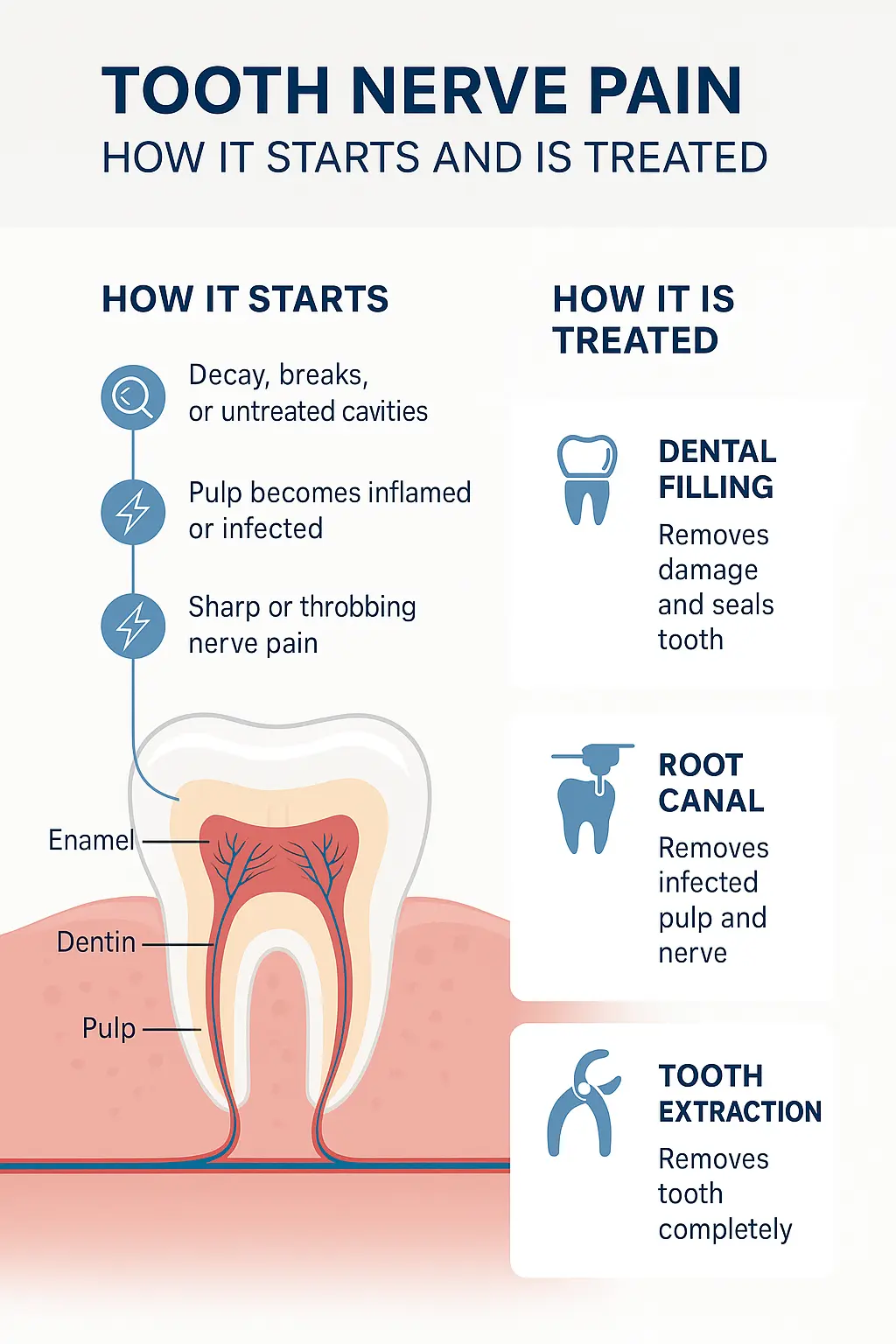
Tooth pain is one of the most unbearable sensations a person can experience. When the nerve inside your tooth gets inflamed or exposed, it can trigger sharp, shooting pain that radiates into your jaw, ear, or even your head. It’s no wonder so many people search for “how to kill tooth pain nerve in 3 seconds permanently” when the pain strikes. But is it really possible to stop nerve pain instantly and forever? The short answer is no—but there are quick ways to manage the pain and long-term treatments that can give you permanent relief.
In this guide, you’ll discover the truth about nerve pain, immediate remedies that work within seconds or minutes, and permanent dental solutions that truly end the pain. You’ll also learn which myths to avoid and when it’s critical to see a dentist.
Understanding Tooth Nerve Pain
When people talk about killing a tooth nerve, what they usually mean is stopping the unbearable pain caused by an irritated or infected nerve.
Within the pulp, which is a soft tissue made up of blood vessels and nerves, resides the nerve inside your tooth.When this tissue is exposed or damaged, pain signals shoot via the trigeminal nerve, which is among the biggest nerves in the facial region. That’s why the pain feels so intense and hard to ignore.
Common causes of tooth nerve pain include:
- Tooth decay (cavities): form when bacteria consume the enamel and dentin, eventually accessing the nerve.
- Tooth abscess: Infection inside the pulp causes severe throbbing.
- Cracked or broken teeth: Can expose or damage the nerve.
- Gum disease: Recession exposes roots, making nerves vulnerable.
- Bruxism, or grinding your teeth, can damage the enamel and leave the sensitive dentin vulnerable.
Here’s a quick overview:
| Cause | Symptoms |
| Cavities | Sharp pain when eating sweets/cold food |
| Abscess | Severe throbbing, swelling, fever |
| Cracked tooth | Pain when biting or chewing |
| Gum recession | Sensitivity to hot/cold |
| Teeth grinding | Dull ache, enamel wear |
Understanding the cause is the first step, because treating nerve pain permanently means treating the underlying problem, not just numbing the pain.
Is it possible to permanently eliminate tooth pain nerve in just three seconds?
The idea of killing a nerve in seconds sounds appealing when pain is at its peak. But here’s the reality:
- In just three seconds, it is not possible to harm a nerve permanently while at home.
- Only a dentist can remove or disable a tooth nerve completely, either with a root canal or extraction.
- DIY methods found online (like pouring chemicals or alcohol on the tooth) are dangerous and can worsen the damage.
The truth: You can stop the pain fast with certain remedies, but permanent solutions require professional care.
Quick Ways to Stop Tooth Nerve Pain Fast
When you’re desperate for relief, even a few seconds matter. While nothing at home can kill the nerve instantly, some methods can provide very fast relief—sometimes in under a minute.
Home Remedies for Immediate Relief
- Cold compress: Place an ice pack or bag of frozen peas wrapped in cloth on your cheek. Cold numbs nerve activity and reduces swelling.
- Saltwater rinse: Mix a teaspoon of salt in a glass of warm water and rinse for 30 seconds. This cleanses and soothes the area.
- Clove oil: Contains eugenol, a natural anesthetic. Dab a few drops on a cotton ball and place it on the tooth. Relief often comes in seconds.
- Garlic paste: Take a garlic clove, mash it up with some salt, and put it straight onto the tooth. Garlic has antimicrobial properties that fight infection.
- Hydrogen peroxide rinse (diluted): Can kill bacteria and reduce discomfort. Never swallow it.
- Painkillers: Ibuprofen or acetaminophen work quickly, especially when combined with the above methods.
Here’s how fast they act and how long relief lasts:
| Remedy | Relief Time | Duration |
| Cold compress | 30–60 seconds | 15–30 minutes |
| Clove oil | Seconds | 1–2 hours |
| Garlic paste | 1–2 minutes | 30–60 minutes |
| Saltwater rinse | 1 minute | Temporary |
| OTC painkillers | 15–30 minutes | 4–6 hours |
Emergency Dental Products That Help
When home remedies aren’t enough, pharmacies sell over-the-counter products designed for dental emergencies:
- Numbing gels (benzocaine): Work within seconds when applied to gums.
- Temporary filling kits: Seal exposed nerves and stop pain until you reach a dentist.
- Antiseptic mouth rinses: Reduce bacteria and ease discomfort.
These products buy you time, but they don’t “kill” the nerve. The pain often returns if the root cause isn’t treated.
Permanent Solutions for Tooth Nerve Pain
If you want to truly end the pain, the nerve itself needs to be treated or removed. This is where dentistry comes in.
Root Canal Therapy
A root canal is the most common way to permanently kill a tooth nerve while saving the tooth.
Step-by-step process:
- Dentist numbs the area.
- Opens the tooth to access the pulp.
- Removes the damaged nerve and tissue.
- Cleans and disinfects the root canals.
- Seals the tooth with filling or crown.
Success rates are over 90%, and once the nerve is removed, you’ll never feel pain in that tooth again.
Tooth Extraction
If the tooth is too damaged, extraction may be the only permanent fix. Once the tooth is taken out, the nerve pain also goes away.
Pros: Immediate relief, no risk of recurring infection.
Cons: Missing tooth may affect chewing, speech, and appearance. Options like implants or bridges are needed to replace it.
Preventive Dental Care
The best way to avoid severe nerve pain is prevention. Simple habits can protect your teeth for life:
- Brush twice a day with fluoride toothpaste.
- Floss daily to prevent gum disease.
- Visit your dentist every 6 months.
- Avoid excessive sugar and acidic drinks.
- Use fluoride rinses and dental sealants if recommended.
Myths About Killing a Tooth Nerve at Home
The internet is full of quick “hacks” that claim to permanently kill a nerve. Most are dangerous myths.
- Myth: Pouring alcohol or bleach on the tooth. This burns tissue and risks poisoning.
- Myth: Applying heat directly. Can cause swelling and worsen infection.
- Myth: Crushing aspirin inside the cavity. Damages gums and doesn’t reach the nerve.
Fact: These methods don’t work and often make the pain worse. Always choose safe remedies or professional treatment.
When to See a Dentist Immediately
Sometimes nerve pain signals a severe infection that can spread quickly. Seek urgent care if you notice:
- Swelling in your face or jaw.
- Fever or general weakness.
- Difficulty swallowing or breathing.
- Severe pain lasting more than a day or two.
- Pus or foul taste in the mouth.
Delaying treatment can allow infection to reach the bloodstream, leading to life-threatening conditions like sepsis.
Frequently Asked Questions
Can salt kill a tooth nerve permanently?
No. Salt can disinfect and reduce pain temporarily but doesn’t kill the nerve.
How long can I live with an exposed tooth nerve?
You may tolerate it for weeks, but infection risks rise daily. It’s unsafe to leave untreated.
Is clove oil a permanent fix for nerve pain?
No. It numbs the area temporarily but doesn’t address the root cause.
Can a dentist kill a tooth nerve without a root canal?
In some cases, yes—like pulpotomy (partial nerve removal) or extraction—but root canal is the standard permanent method.
What’s the fastest way to stop nerve pain at night?
Apply clove oil, take ibuprofen, and use a cold compress. Elevating your head also reduces blood pressure on the nerve, easing pain.
Final Thoughts
Tooth pain is brutal, and when the nerve is exposed or infected, the agony can feel endless. While many people search for ways to kill tooth pain nerve in 3 seconds permanently, the reality is that instant permanent solutions don’t exist at home.
- You can relieve pain in seconds with clove oil, ice, or numbing gels.
- You can extend relief with painkillers and temporary fillings.
- But for permanent nerve removal, only a dentist can help through a root canal or extraction.
So while the phrase sounds appealing, the safe and lasting path is professional dental treatment. Don’t rely on myths or dangerous DIY tricks. Take care of your teeth, and you’ll avoid ever needing to kill a tooth nerve in the first place.












Leave a Reply