

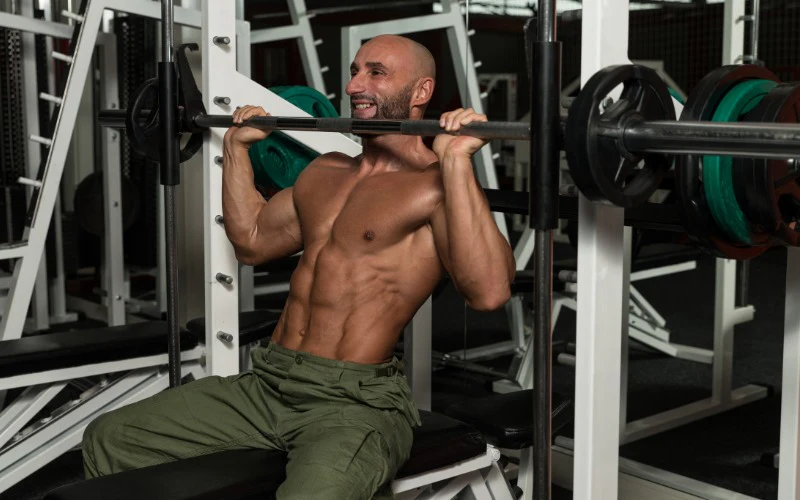
If you’ve ever stepped into a gym and used a Smith machine, you’ve probably asked yourself: How much does the bar actually weigh?The response is not as simple as you may assume. While a standard Olympic barbell is fixed at 45 pounds (20 kilograms), the bar on a Smith machine can vary depending on the model, design, and counterbalance system. Knowing the real weight is essential if you want to track your progress, adjust your training loads, and avoid frustration when switching between different types of equipment.
This guide will walk you through everything you need to know about Smith machine bar weight. You’ll learn the typical ranges, factors that influence the bar’s weight, how to measure it yourself, and why it matters for your workouts.
What Is the Smith Machine?
The Smith machine is a staple in many commercial gyms and even some home gyms. It’s a piece of strength training equipment designed with a fixed barbell that moves along vertical or slightly angled rails. The purpose of this setup is to provide stability and safety.
Unlike a free barbell, which moves in multiple planes, the Smith machine restricts movement to one path. This makes it easier to control the bar, especially for beginners or for exercises where balance is a concern, like squats or bench presses.
Why bar weight matters:
- It helps you know exactly how much you’re lifting.
- It ensures your training program is consistent.
- It prevents confusion when switching between Smith machines and barbells.
Standard Smith Machine Bar Weight
While Olympic barbells always weigh 45 pounds (20 kg), Smith machine bars are not standardized. Most bars fall between 15 to 25 pounds (6 to 11 kg). Some machines with strong counterbalance systems can reduce the effective bar weight to as little as 6 pounds (2.7 kg).
So when someone says, “The bar weighs nothing,” that’s not entirely accurate. The bar always has mass, but the design of the machine changes how heavy it feels in your hands.
Quick facts:
- Average commercial Smith bar weight: 15–20 lbs.
- Counterbalanced bars can feel much lighter than their actual weight.
- Some home gym Smith machines may have heavier bars, closer to 25–30 lbs.
Factors That Affect Smith Machine Bar Weight
The exact weight you feel on a Smith machine depends on several factors:
- Counterbalance Systems
- Many Smith machines use a counterweight system with pulleys and cables to offset the bar’s weight.
- This makes the bar easier to move and reduces the effective load.
- Bar Material and Construction
- Steel bars are heavier and more durable.
- Aluminum or lighter alloys are sometimes used in smaller or cheaper models.
- Commercial vs Home Gym Models
- Commercial gym Smith machines are usually built for durability and smoother operation, often with lighter effective bar weights.
- Home versions may skip counterbalances, leading to heavier bars.
- Guide Rails and Friction
- Some machines have high-quality ball-bearing rails, making the bar glide effortlessly.
- Others may add resistance through friction, slightly altering the feel of the lift.
Types of Smith Machines and Their Bar Weights
There isn’t just one type of Smith machine. Each design comes with its own quirks.
Standard Smith Machines
- No counterbalance system.
- Bars usually weigh 20–30 lbs.
- More common in budget gyms or home setups.
Counterbalanced Smith Machines
- Equipped with pulleys and weights to offset the bar.
- Effective weight often feels as light as 6–15 lbs.
- Popular in commercial gyms.
Angled vs Vertical Track Machines
- Vertical tracks restrict movement to straight up and down.
- Angled tracks (usually 5–7 degrees) mimic natural bar paths for squats and presses.
- The angle can slightly affect how the weight feels.
Example Comparison Table
| Smith Machine Type | Actual Bar Weight | Effective Weight | Common Location |
| Standard (no counterbalance) | 20–30 lbs | 20–30 lbs | Home gyms, small gyms |
| Counterbalanced | 20–25 lbs | 6–15 lbs | Commercial gyms |
| Angled Rail Smith | 15–25 lbs | 10–20 lbs | Commercial gyms |
How to Measure Smith Machine Bar Weight Yourself
If your gym staff doesn’t know the specs of their Smith machine, you can check the bar’s weight on your own. Here are two simple methods:
Method 1: Use a Scale
- Place a sturdy scale on the floor.
- Position the Smith machine bar so it rests on the scale.
- Read the measurement—it will show the actual bar weight (not the counterbalanced feel).
Method 2: Plate Testing
- Start with the bar unloaded.
- Add a known weight plate (e.g., 10 lbs).
- Test how heavy it feels compared to free weight lifting.
- Estimate the bar’s effective weight based on the difference.
Tip: Always perform the test carefully to avoid damaging the scale or equipment.
Smith Machine Bar vs Olympic Barbell
A common mistake is assuming the Smith machine bar is the same as an Olympic barbell. Let’s break it down:
- Olympic Barbell Weight: Always 45 lbs (20 kg).
- Smith Machine Bar Weight: 6–30 lbs, depending on the machine.
Key Differences:
- The Smith bar moves on rails, removing the need for stabilization.
- Olympic bars require balance and recruit more stabilizing muscles.
- Switching between the two requires load adjustment.
Example:
If you bench press 135 lbs on a Smith machine with a 15-lb effective bar, then switch to an Olympic bar, you’ll be lifting 150 lbs. That’s a 15-lb jump you need to account for.
Why Knowing Smith Machine Bar Weight Matters
Accurate knowledge of the bar’s weight isn’t just a fun fact—it directly impacts your training.
Here’s why it matters:
- Tracking Progress: If you’re unsure of the load, your training log will be inconsistent.
- Preventing Misjudgment: Overestimating can lead to injury; underestimating can slow your gains.
- Workout Programming: Correct bar weight helps you design balanced programs.
- Comparison Purposes: You can fairly compare your Smith lifts to free barbell lifts.
Case Example:
A lifter progressing from 185 lbs on Smith bench press to 225 lbs thought they’d added 40 lbs of muscle strength. In reality, the bar’s effective weight was just 10 lbs, making the increase closer to 30 lbs. While still impressive, it shows why precision matters.
Common Questions About Smith Machine Bar Weight
Does the bar weigh zero?
No. The bar always has weight, but the counterbalance system can make it feel close to zero.
Why does the bar feel lighter than expected?
Because of pulleys and counterweights that offset much of its mass.
Do all gyms have the same Smith machine bar weight?
Not at all. Different manufacturers, models, and setups vary widely.
Is the Smith machine harder or easier than free weights?
Generally easier, since the bar is stabilized. However, the fixed path can sometimes make certain lifts feel unnatural or awkward.
Tips for Training with a Smith Machine
While free weights are excellent for building functional strength, the Smith machine has its place.
Best practices include:
- Use it for hypertrophy work, where balance is less critical.
- Practice controlled reps without worrying about stability.
- Adjust weight loads to account for lighter bars.
- Don’t rely on it exclusively—mix free weights for balanced muscle development.
Good exercises on the Smith machine:
- Squats (for beginners or rehab work)
- Bench presses with lighter loads
- Overhead presses
- Calf raises
- Shrugs
Conclusion
The bar weight on a Smith machine isn’t universal. It typically ranges from 6 to 30 pounds, depending on whether the machine is counterbalanced, angled, or standard. Understanding the true weight helps you log workouts accurately, avoid misjudgments, and transition smoothly between Smith machine and free barbell training.
The bottom line: Always check the specifics of your gym’s Smith machine. If the staff doesn’t know, use a scale or test it yourself. With this knowledge, you’ll be in control of your progress and able to program your workouts with confidence.










Leave a Reply