

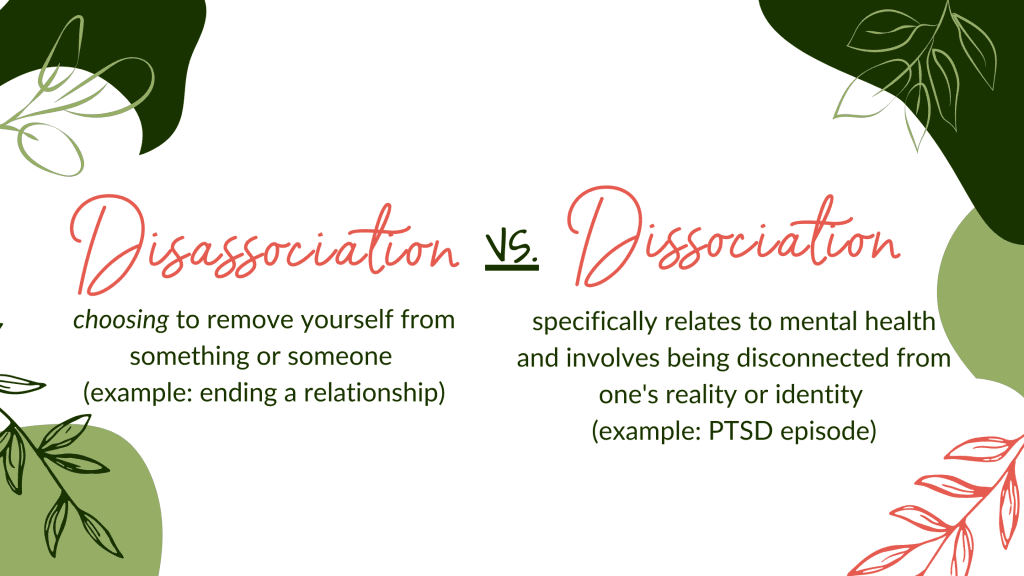
Language can be tricky, especially when two words look and sound so similar that most people use them interchangeably. One of the best examples of this is the pair dissociate vs disassociate. Both appear in dictionaries, both are used in writing and speech, and yet many writers and students are unsure about which one is correct in different contexts.
This article breaks down the nuances between the two, explores their history, and examines how they are applied in psychology, business, and everyday communication. By the end, you’ll know not only which one to choose but also why your choice matters.
What Does Dissociate Mean?
The word dissociate has been part of English for centuries. It comes from the Latin dissociare, which means “to separate from fellowship or society.” At its core, it means to separate, disconnect, or remove oneself from something.
In everyday use, “dissociate” refers to mentally or emotionally stepping back from a situation. For example, someone might say, “I want to dissociate myself from that argument.” The key element here is detachment—whether physical, mental, or social.
Dissociate in Psychology
One of the most important areas where the term appears is psychology. Dissociation is a recognized phenomenon that describes a mental state where a person feels detached from thoughts, identity, or reality. It can be mild, like daydreaming during a boring lecture, or severe, as in dissociative disorders where people may lose connection with memory or sense of self.
Common examples in psychology:
- A trauma survivor who feels disconnected from reality.
- Someone experiencing depersonalization (feeling outside their own body).
- Memory gaps or “lost time” in dissociative identity disorder.
Quote from the American Psychiatric Association:
“Dissociation is a disruption in the normal integration of consciousness, memory, identity, emotion, perception, and behavior.”
So in psychology, the word is not just a variant—it is the preferred and technical term.
What Does Disassociate Mean?
The word disassociate is actually a later variant of “dissociate.” It developed as a way to mirror the prefix dis- that often means “not” or “away.” Linguists believe that because many English speakers felt “dissociate” looked unusual, they reshaped it into the more familiar-looking “disassociate.”
Usage in Modern English
Today, disassociate is accepted in dictionaries and appears in reputable writing, though it is less common than dissociate. It often shows up in business, politics, and casual conversation.
Examples:
- “The company disassociated itself from the scandal.”
- “He decided to disassociate from the club after disagreements.”
Unlike in psychology, where “dissociate” is dominant, in general English the two are often treated as interchangeable.
Is Disassociate Incorrect?
No. It’s not grammatically wrong, but style guides often recommend dissociate as the more formal and widely accepted option. Think of disassociate as a variant that works but isn’t always the first choice.
Dissociate vs Disassociate: The Core Difference
So where does the real difference lie? The truth is, they often overlap, but there are distinctions in tone, preference, and professional use.
Here’s a comparison:
| Aspect | Dissociate | Disassociate |
| Origin | From Latin dissociare | Later variant formed in English |
| Usage | Academic, psychology, formal writing | Business, politics, casual writing |
| Formality | Considered standard and preferred | Acceptable, but secondary |
| Fields | Psychology, science, law | Media, business, politics |
| Example | “She tried to dissociate from her past.” | “The board disassociated from the decision.” |
Summary: If you’re writing in an academic or medical context, dissociate is the safe bet. If you’re in business or casual conversation, disassociate is fine, though some readers may still see it as less polished.
Which One Should You Use?
Style matters. Different fields and authorities lean toward one or the other.
- Oxford English Dictionary favors dissociate as the primary form.
- Merriam-Webster lists both, though dissociate comes first.
- APA (American Psychological Association) uses dissociate in all psychological literature.
Practical advice:
- In psychology, science, or academic writing, always use dissociate.
- In business, journalism, or casual use, either works, but dissociate is still preferred.
- When in doubt, stick with dissociate.
Common Contexts and Examples
In Psychology
- “Patients with trauma often dissociate to protect themselves from overwhelming stress.”
- “Dissociation can lead to memory loss or a feeling of detachment.”
In Business or Politics
- “The politician quickly disassociated himself from the controversial remark.”
- “The brand disassociated from the influencer after backlash.”
Everyday Language
- “She wanted to dissociate from her toxic friends.”
- “I disassociated from that group years ago.”
Mini Case Study: Word Use in Publications
- The New York Times tends to use “disassociate” in political reporting.
- Academic journals like the Journal of Trauma & Dissociation exclusively use “dissociate.”
- Business magazines often use either word interchangeably.
This shows how the choice often depends on audience and formality.
Synonyms and Alternatives
Sometimes, using a synonym can make your writing clearer. Both words can often be replaced with terms like:
- Detach
- Disconnect
- Separate
- Break away
- Withdraw
- Cut ties
Example: Instead of saying “He disassociated from the project,” you might say “He cut ties with the project.”
FAQs About Dissociate vs Disassociate
Q1: Is disassociate incorrect?
No, it’s not incorrect. It’s simply less common and often seen as a variant spelling.
Q2: Do psychologists use disassociate?
Almost never. Psychology recognizes dissociate and dissociation as the standard terms.
Q3: Which is more common in British English?
British English prefers dissociate, though both forms exist.
Q4: Why do both words exist if they mean the same thing?
Because language evolves. Speakers created disassociate as a variant that felt more natural, and it stuck.
Conclusion
At first glance, dissociate vs disassociate may look like a needless duplication, but context reveals their differences. Dissociate is older, standard, and dominates in psychology and formal writing. Disassociate is a newer variant that appears in business and casual speech. Neither is wrong, but one is usually better depending on your audience.
When you write, think of it this way:
- For precision, formality, and psychology: use dissociate.
- For everyday conversation or business: disassociate will be understood, though dissociate still carries more authority.
Language is always shifting, but clarity remains the goal. If your readers immediately understand your meaning, you’ve chosen well.
Final Thought: Words like these remind us that English is full of subtle shades. By knowing the difference, you can not only avoid mistakes but also make your writing sharper and more professional.







Leave a Reply