

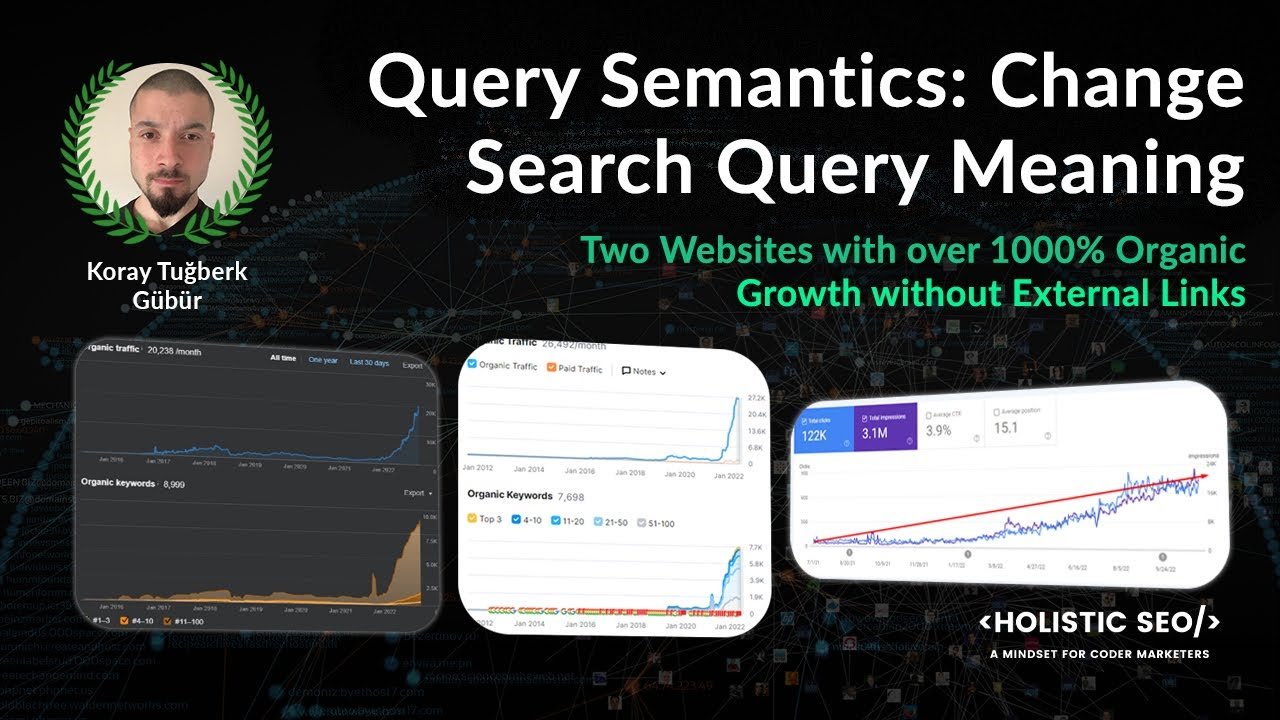
Ever asked yourself, why does some content climb to Google’s first page while other stuff vanishes into the digital abyss? Let’s dive into something smarter, stronger: semantic content networks by Ben Stace. This isn’t your run‑of‑the‑mill SEO advice. Instead, it’s about weaving meaning, structure, and connection into your content so search engines—and humans—can’t ignore it.
Table of Contents
What Are Semantic Content Networks?
When we talk about semantic content networks, we mean a web of meaning—not just a string of SEO‑optimized pages. Instead of treating each post as a solo performer, you create a connected architecture where every piece talks to the others.
Imagine your content as a vibrant topic ecosystem, where every article, blog post, guide, or FAQ links and relates based on context and intent. You go beyond keywords. You build a network where relevance flows naturally.
Why this matters:
- UGC (User-generated content) and long‑tail topics pop up more easily.
- Google’s changing algorithms—such as BERT, RankBrain, and neural matching—prefer content that is rich in meaning.
- When content connects well within a semantic network, it creates stronger E-E-A-T (Experience, Expertise, Authoritativeness, Trustworthiness) signals.
Who Is Ben Stace and What Makes His Approach Unique?
Ben Stace stands out as a guide in the maze of content architecture. He transformed content creation by using ideas from semantic search, artificial intelligence, and knowledge graph theory.
Here’s why his method shines:
- He crafts topic clusters that form real-world conceptual frameworks.
- He pushes for intent-based internal linking, not just filler “related posts.”
- His strategies focus on depth, structure, and meaning, rather than keyword stuffing.
In his own words (paraphrased):
“You don’t just write content. You map meaning, connect ideas, and make your site a living graph.”
His influence spans content creators, digital marketers, and SEO strategists—bringing structure where chaos once reigned.
How Semantic Content Networks Work in Practice
Building Blocks of a Semantic Network
| Component | Description |
| Node | A content piece—blog, article, FAQ, video |
| Edge | A meaningful link based on intent or shared context |
| Graph Structure | The invisible framework guiding both users and crawlers |
Envision a diagram where each dot symbolizes a piece of content. The links that connect these dots are referred to as edges. connect them logically. Together, they form a knowledge graph—clear, organized, meaningful.
Semantic Mapping: Aligning Content with User Intent
Start with a root topic—say “content strategy“. Branch out to:
- Secondary topics: “content calendar“, “audience research“
- Supporting topics: “tools for ideation“, “beat writer’s block“
Begin by creating a semantic map diagram, where you start with your main idea at the center and then extend branches outward.—and inward—to create a navigable network.
Internal Linking with Purpose
Instead of “check this out next,” use smart, meaningful anchors:
- Good: “explore how content calendars boost your editorial efficiency.”
- Weak: “click here for more.”
Ben Stace calls it “link density with clarity”. You want depth (lots of connections) but with coherence—links must make sense, not just exist.
Benefits of Semantic Content Networks by Ben Stace
1. SEO Power That Lasts
- Richer search snippets
- Better rankings across related terms and long‑tail queries
- Lower bounce rates, higher dwell time
2. Smarter Content Planning
- Build one pillar that spawns many offshoots
- Google sees your site as a topic authority, not just a broke blog
3. Evergreen Structure
- Time‑proof content ecosystem
- Easy to scale, update, and navigate
How to Implement a Semantic Content Network Strategy
Follow this blueprint, inspired by Stace’s model:
- Pick Your Pillar Topic – It should fit your brand and audience.
- Map Secondary & Supporting Topics – Create a visual network; brainstorm content ideas.
- Design Internal Link Architecture – Use descriptive anchors. Connect both ways.
- Ben Stace presents Semantic Content Networks: Developing a Content Framework That Achieves Strong Rankings.
- Optimize On‑Page Signals – Schema markup, H2s with LSI variants, synonyms, related concepts.
Useful tools:
- Mapping: InLinks, Topic, MarketMuse
- Structure analysis: Screaming Frog, Sitebulb
- Content optimization: Surfer SEO, Frase
Common Mistakes to Avoid
- Stuffing keywords—putting “semantic content network by Ben Stace” in too many places comes off as spammy and makes the text hard to read.
- Isolated content—articles that stand alone with no internal links waste opportunity.
- Weak internal links—anchors like “read more” do no semantic work.
Real-World Case Studies
Case 1: “Blog Chaos to Semantic Clarity”
A mid‑sized blog had scattered posts. Applying semantic clustering, internal linking, and topic hubs:
- Organic traffic grew 60% in 6 months.
- Bounce rate dropped 25%.
Case 2: “Niche Authority with Content Clusters”
A hobby‑site structured its content around one central theme, spun out sub‑topics, and used careful linking.
Result: It began ranking for multiple long‑tail keywords, exceeding competitors with higher domain authority.
The Future of Semantic Content & Why Ben Stace’s Model Lasts
Search engines move toward understanding meaning, not just keywords. With AI and NLP advancing, semantic content networks are more relevant than ever.
- As voice search grows, intent mapping matters.
- As AI content rises, unique structure wins.
- Your site becomes a living, logical web of knowledge—not just a blog archive.
Ben Stace’s blueprint gives you that edge—thoughtful, scalable, future‑proof.
Final Thoughts: Time to Build Your Semantic Web
Stop crafting content in silos. Create a lasting, educational network of meaningful content with Ben Stace that links people together.
Here’s what you can do next:
- Audit your site for orphaned articles or weak linking.
- Sketch your first semantic map.
- Write with intent—not just keywords.
- Link with clarity and purpose.
Imagine your website as a dynamic ecosystem, where each post serves a meaningful role and fosters connections. Let your content rank not just on keywords, but on meaning—and in that lies real SEO power.










Leave a Reply