

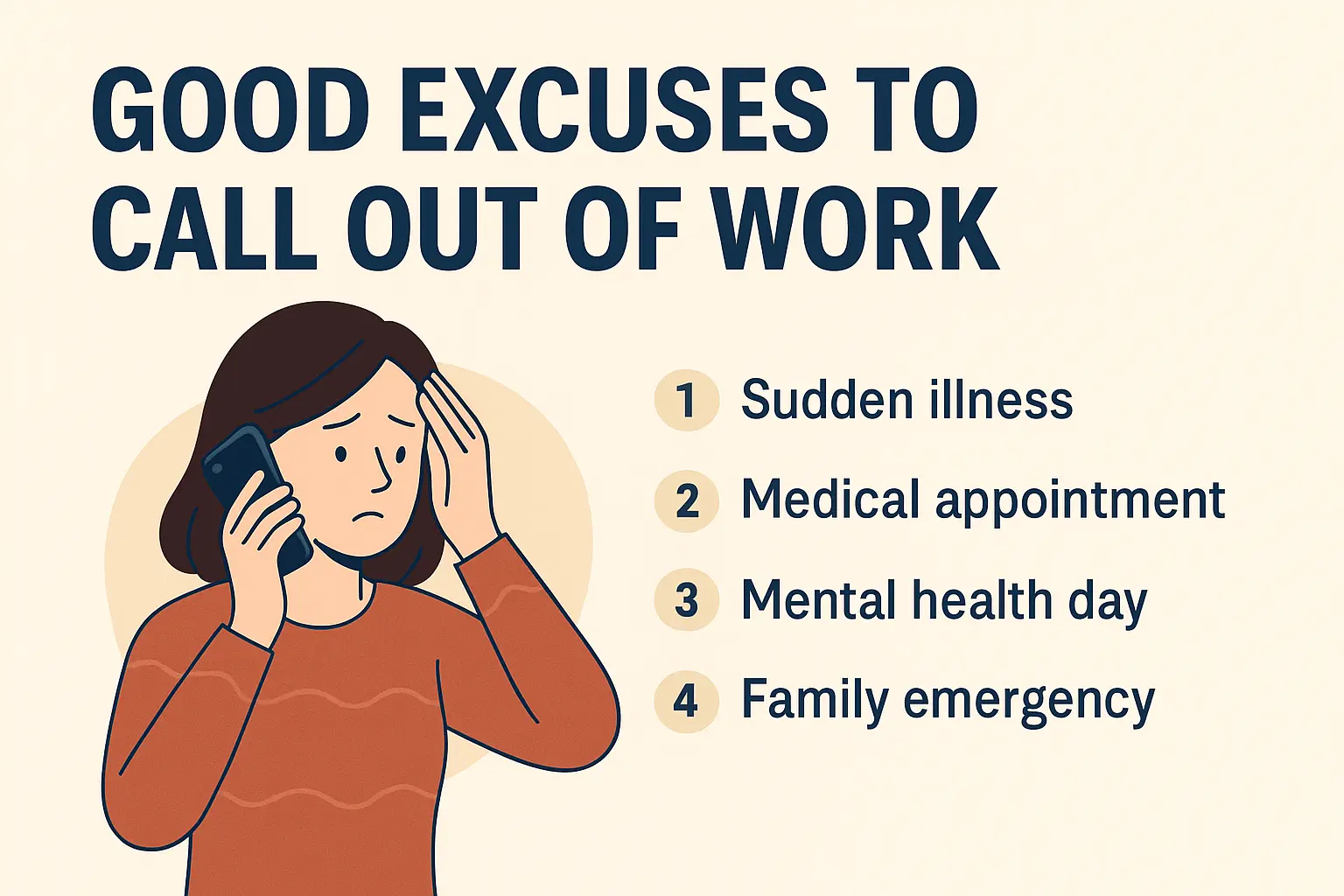
Taking time off from work is part of maintaining balance between your personal life and career. Yet, many people feel guilty when they need a day off. Sometimes the real challenge isn’t whether you deserve the time, but how to communicate it to your employer without damaging trust or credibility. Choosing the right words matters. The difference between “I’m not coming in today” and “I need to stay home due to illness” can determine how your absence is received. This guide explores the best excuses, explains what makes them effective, and shows you how to deliver them professionally.
Why Having a Good Excuse to Call Out of Work Matters
Your absence affects more than just your own schedule. It influences your team’s workload, deadlines, and your employer’s impression of you. That’s why providing a clear, valid excuse is important.
When you offer a believable reason, you:
- Maintain credibility with your supervisor.
- Show respect for workplace policies.
- Avoid unnecessary conflict or suspicion.
Case study: A customer service representative named Sarah once claimed she had a “family emergency” three times in one month. Later, it was discovered she was actually attending music festivals. When the truth surfaced, her employer’s trust evaporated. By contrast, her colleague Mark took the same number of days off but cited verifiable reasons like illness and a dentist appointment. Mark remained in good standing because his excuses were transparent and professional.
Trust is a currency in the workplace. Protect it by being honest, concise, and considerate when explaining why you can’t come in.
What Makes a “Good” Excuse to Call Out of Work?
Not every reason will be taken seriously. A solid excuse has three main qualities:
- It’s believable. Saying you lost your voice due to illness is reasonable; claiming you lost it after yelling at a football match may not be.
- It respects workplace rules. Many organizations already allow sick days, personal leave, or bereavement leave. Lean on these categories rather than inventing something unusual.
- It’s short and professional. Keep your explanation to a sentence or two. Avoid oversharing about your private life.
What NOT to use as excuses:
- “I overslept.”
- “I don’t feel like coming in.”
- “I’m waiting for a package delivery.”
- “My friend needs me to hang out.”
Weak excuses like these make you appear unprofessional and risk damaging your credibility.
The Best Good Excuses to Call Out of Work
Here are categories of reasons that most employers view as legitimate.
Medical-Related Excuses
Health-related absences are the most common and widely accepted. Employers understand that working while sick not only reduces productivity but also risks spreading illness to coworkers.
Examples include:
- Common illnesses like flu, fever, or food poisoning.
- Doctor’s appointments or medical checkups that can’t be scheduled outside work hours.
- Mental health days, which more workplaces are beginning to acknowledge as essential for long-term productivity.
Example script:
“Hi [Manager’s name], I’m not feeling well today and will need to take a sick day. I’ll update you tomorrow if I need additional time off.”
Family Emergencies
Family obligations are another legitimate reason. Emergencies involving children, spouses, or elderly relatives often require immediate attention.
- Caring for a sick child.
- Attending a sudden school meeting.
- Assisting an elderly parent after a fall.
Most managers will understand because these situations are out of your control.
Household or Personal Emergencies
Unexpected issues at home can make it impossible to get to work. These may include:
- Plumbing failures like burst pipes.
- Power outages that disrupt essential tasks.
- Car breakdowns or accidents.
Always offer a quick, respectful explanation. For example:
“My car broke down this morning and I’m waiting for roadside assistance. I won’t be able to make it in today.”
Bereavement and Serious Events
Death in the family or supporting loved ones during crises is among the most compassionate reasons for absence. Employers often grant bereavement leave or at least show understanding in such cases.
Pre-Approved Reasons
Some excuses are already accepted under workplace policies:
- Religious observances.
- Jury duty or court appearances.
- Pre-booked vacation or personal days.
Being transparent about these in advance helps your manager plan around your absence.
Excuses That Sound Bad (and Why You Should Avoid Them)
Bad excuses often stem from either over-explaining or fabricating. They fail because they don’t sound credible or they show disregard for professional standards.
Common examples:
- “I stayed up too late gaming.”
- “I’m tired from partying.”
- “My horoscope says I shouldn’t leave the house.”
To clarify the difference, here’s a table:
| Good Excuse | Bad Excuse |
| “I have the flu.” | “I’m hungover.” |
| “My child is sick.” | “My friend needs company.” |
| “Car won’t start.” | “Traffic is too heavy.” |
| “Attending a funeral.” | “I need a break from my boss.” |
How to Professionally Deliver Your Excuse to Call Out of Work
A valid reason loses its power if communicated poorly. Delivery matters.
Best practices:
- Keep it short. Don’t turn your excuse into a personal diary entry.
- Use the right channel. If your workplace expects a phone call, don’t just send a text.
- Offer solutions. If possible, mention you’ll catch up on missed tasks.
Example email:
Subject: Request for Sick Day
Hi [Manager],
I’m not feeling well today and won’t be able to work. Please let me know if you’d like me to hand over any urgent tasks. I expect to return tomorrow.
Best,
[Your Name]
Balancing Honesty and Privacy
You’re not obligated to reveal every detail of your absence. It’s acceptable to say you’re dealing with a “personal matter” if you don’t want to share specifics. Employers respect boundaries when you remain professional.
However, be consistent. If you say “personal matter” too often, suspicion may rise. Strike a balance between honesty and discretion.
Also, understand your legal rights:
- Many countries mandate a set number of paid sick days.
- Family and Medical Leave Acts (such as in the U.S.) protect longer absences for serious health conditions.
- Some states and countries allow mental health leave under the same umbrella as sick days.
Tips to Maintain Professionalism When Calling Out
Even if your excuse is legitimate, frequent absences raise eyebrows. To protect your reputation:
- Notify early. Contact your manager as soon as you know you can’t come in.
- Avoid patterns. Calling out every Monday makes your excuse seem suspicious.
- Track your reliability. Document days you’ve taken off to avoid overuse.
- Be respectful of team workload. Offer to cover shifts later or work remotely if possible.
Real-world contrast:
- Reliable employee: Jane missed two days in six months due to illness but made sure to delegate tasks beforehand.
- Unreliable employee: Tom called out seven times in three months, often without notice, citing vague reasons. Tom’s manager eventually issued a warning.
FAQs About Calling Out of Work
Can I call out without giving a reason?
Yes, but it depends on company policy. Some workplaces allow a generic “personal day,” while others require a specific explanation.
What is the acceptable number of days off due to illness each year?
It varies. In the U.S., the average is around 7–10 days annually, depending on employer benefits.
What if my boss doesn’t believe me?
Stick to the truth. If your absence is genuine, consistency over time will prove your reliability.
Can I be fired for calling out too often?
In at-will employment regions, yes. Even with sick leave protections, excessive absenteeism can lead to termination. Always monitor how often you use time off.
Final Thoughts on Good Excuses to Call Out of Work
Everyone needs a break sometimes. Life throws unexpected events at you, from illnesses to family emergencies, and taking time off is not a weakness. A good excuse to call out of work is one that’s believable, respectful, and concise. Protect your credibility by using strong reasons, communicating them professionally, and respecting company policies.
Remember: your health and family come first, and good employers understand that. By being transparent and responsible, you maintain balance without damaging your reputation.









Leave a Reply