

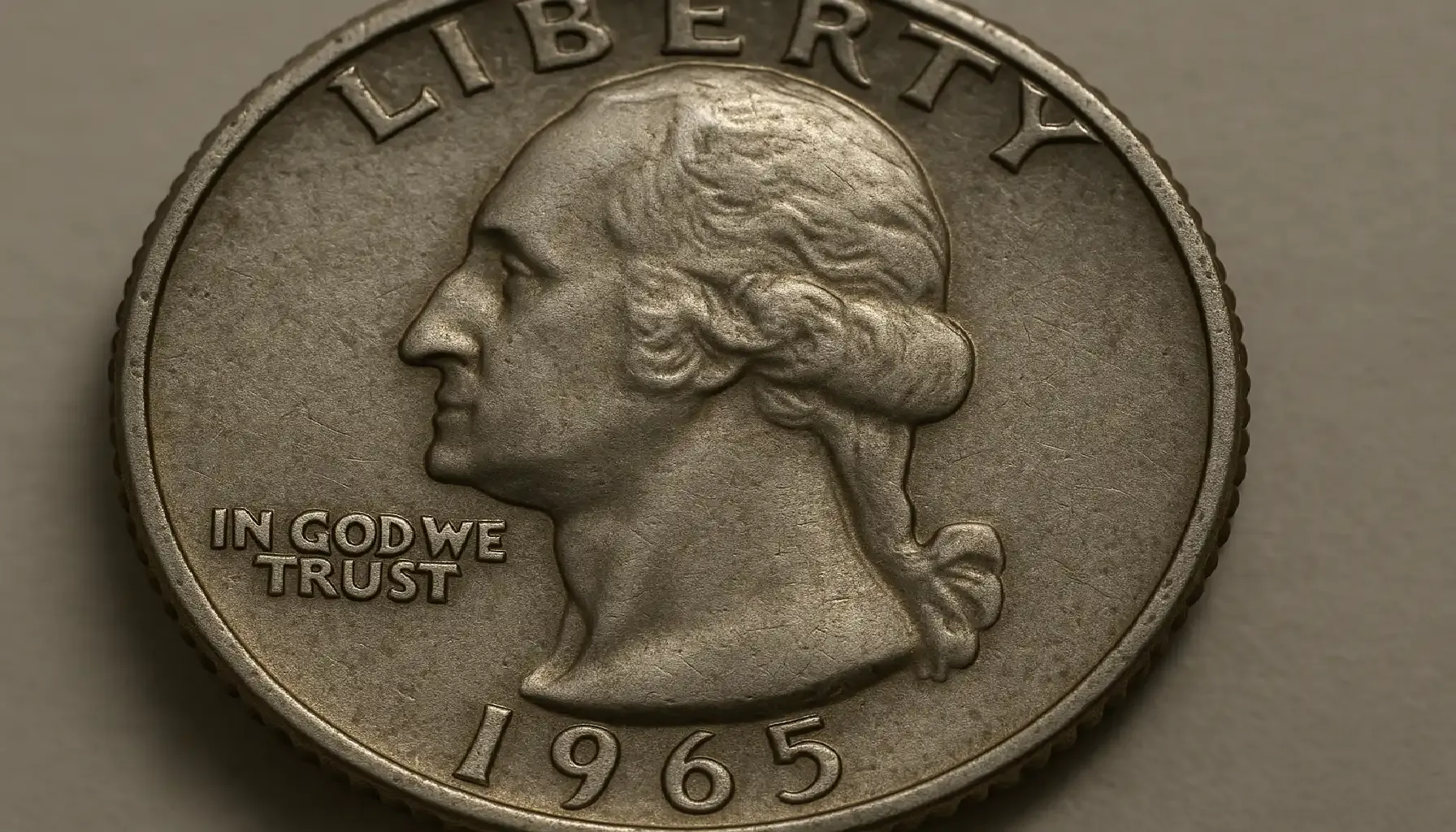
Most people never think twice about pocket change, but sometimes a coin holds more than face value. The 1965 Washington quarter is one of those coins. While it may seem ordinary, this quarter represents a turning point in U.S. coinage history, and in certain cases, it can be worth far more than twenty-five cents. Whether you’re a seasoned collector or just curious about that coin in your change jar, knowing the real worth of a 1965 quarter can surprise you.
Background of the 1965 Washington Quarter
The 1965 quarter marked a major shift in American currency. Before that year, quarters were struck in 90% silver and 10% copper. Rising silver prices in the early 1960s made it more expensive for the U.S. Mint to continue producing silver coins. Many people even hoarded silver quarters for their melt value, creating a shortage in circulation.
To solve the problem, Congress passed the Coinage Act of 1965, which removed silver from quarters and dimes and reduced the silver content of half dollars. Instead, the Mint switched to a clad composition of copper-nickel layered over a pure copper core. The design by John Flanagan featuring George Washington remained the same, but the inner makeup changed dramatically.
Key details of the 1965 quarter:
Designer: John Flanagan
Weight: 5.67 grams
Diameter: 24.3 mm
Composition: 75% copper, 25% nickel over copper core
Edge: Reeded
Mintage: Over 1.8 billion
This high mintage means most 1965 quarters aren’t rare. Yet certain errors and conditions set some apart from the rest.
How Much Is a 1965 Quarter Worth?
For most circulated examples, the value remains close to face value. However, collectors pay more for high-grade coins or rare errors. Here’s a quick breakdown:
Condition Estimated Value Notes
Circulated $0.25–$1 Common, most in pocket change
Uncirculated (MS60–MS65) $2–$10 Bright luster, no wear
High-Grade (MS67+) $100–$500+ Very rare in pristine condition
Error Varieties $500–$10,000+ Silver planchet errors most valuable
For instance, an ordinary circulated 1965 quarter might be worth only a quarter. Yet an MS67 example certified by PCGS or NGC could fetch several hundred dollars at auction.
Rare 1965 Quarter Errors That Can Be Worth Thousands
When billions of coins are struck, mistakes happen. Some of these minting errors turn a common coin into a valuable collectible.
1965 Silver Quarter Error
One of the most famous errors is the 1965 silver quarter. During the transition away from silver, a few leftover planchets from 1964 were mistakenly struck with 1965 dates. These weigh 6.25 grams instead of the clad 5.67 grams. Collectors can identify them by weight, appearance, and sound.
Auction highlight: In 2019, a 1965 silver quarter sold for over $7,000 at Heritage Auctions.
Key tip: Always weigh suspicious coins; if it hits 6.25 grams, you may have struck silver.
Double Die 1965 Quarter Error
A double die occurs when the coin design is impressed twice at slightly different angles. On a 1965 quarter, doubling might appear on the lettering or date.
Light doubling can increase value modestly.
Strong doubling can bring in hundreds of dollars depending on clarity.
Off-Center Strikes and Other Errors
Other valuable mint errors include:
Off-center strike: Part of the design is missing.
Clipped planchet: A part of the edge of the coin is absent.
Broadstrike: Coin struck without a collar, creating a stretched shape.
Error collectors pay premiums for unusual and dramatic mistakes.
How to Identify a Valuable 1965 Quarter
If you think you’ve found a special 1965 quarter, here’s how to check:
Weigh the coin – A silver quarter weighs 6.25 grams, while clad versions weigh 5.67 grams.
Inspect the luster – Uncirculated coins have strong shine and no wear.
Look for doubling – Use a magnifier to check for doubled lettering or numbers.
Check for off-center strikes – Misaligned designs can increase value.
Compare edges – Silver coins lack the copper stripe visible on clad quarters.
Tools you’ll need:
A digital scale accurate to 0.01 grams
A 10x coin magnifier
A reference guide or grading book
Grading the 1965 Quarter and Why It Matters
Grading is crucial because condition determines value. Collectors use the Sheldon scale ranging from Poor (P-1) to Mint State (MS-70).
Circulated grades (Good to Fine): Show wear, worth around face value.
About Uncirculated (AU-50 to AU-58): Slight wear, light marks.
Mint State (MS-60 to MS-70): No wear, original mint luster.
Professional grading services like PCGS and NGC authenticate and assign grades. A coin graded MS67 by one of these organizations may sell for several hundred dollars, while the same coin without certification might bring much less.
Where to Sell a 1965 Quarter
When you’ve identified a valuable quarter, choosing where to sell matters.
Coin Shops and Dealers
Pros: Quick sales, expert opinions.
Cons: Dealers offer wholesale prices lower than retail.
Online Marketplaces and Auctions
Websites like eBay, Heritage Auctions, and Great Collections allow sellers to reach a global audience. Rare errors and high-grade coins often fetch the best prices at major auctions.
Coin Shows and Collectors’ Networks
Coin shows let you connect directly with collectors who may pay premium prices. Local coin clubs and online forums are also good resources for networking and advice.
Tips for Collectors: Building Value with 1965 Quarters
Even common 1965 quarters can hold future potential if kept in pristine condition. Here’s how to protect your coins:
Use protective holders – 2×2 flips, coin capsules, or albums prevent scratches.
Avoid cleaning – Cleaning damages value and leaves unnatural marks.
Store in a cool, dry place – Humidity can cause tarnish or corrosion.
From an investment perspective, 1965 quarters may not skyrocket in value, but rare errors and top-grade pieces continue to attract strong interest. Patience, careful storage, and market knowledge help collectors build value over time.
Frequently Asked Questions (FAQ) About the 1965 Quarter
Are 1965 quarters made of silver?
Most are clad copper-nickel, but a small number were mistakenly struck on silver planchets.
What is the highest recorded price for a 1965 quarter?
Some error coins have sold for over $10,000 at auction.
How can I tell if my 1965 quarter is rare?
Check the weight, inspect for errors, and consider professional grading.
Should I clean my 1965 quarter before selling it?
Never clean coins—collectors prefer natural surfaces, even with tarnish.
Final Thoughts: The Real Worth of the 1965 Quarter
The 1965 quarter isn’t just a piece of pocket change—it’s a snapshot of American history. Most examples are worth only face value, yet rare errors and high-grade coins command significant premiums. Collectors who know what to look for can turn an ordinary coin into a small fortune. So next time you sort through your change, don’t overlook that 1965 quarter. It might be worth more than you think.








Leave a Reply