

Squirrels are among the most familiar animals you see in backyards, parks, and wooded areas. Their playful energy and constant motion often raise questions about their life cycle. One of the most common is when do squirrels have babies, especially if you hear rustling in your attic or spot a tiny, fur-covered head peeking from a nest. Understanding the timing of squirrel births helps wildlife enthusiasts observe them more closely and also helps homeowners protect their property responsibly.
This guide explores breeding seasons, species differences, nesting behavior, and growth milestones so you’ll know exactly when and how squirrels bring new generations into the world.
General Breeding Seasons of Squirrels
Squirrels follow a fairly consistent reproductive cycle, although climate and location can create small variations. In most regions of North America, tree squirrels mate twice each year. The first breeding season happens in late winter, usually between January and February. The second comes during midsummer, around June or July.
The gestation period lasts about 42–46 days, depending on the species. That means the first litters of babies typically appear in early spring, while the second litters arrive in late summer to early fall.
Environmental conditions matter. In warmer climates, breeding can start earlier and last longer, while harsh winters may shorten or delay the cycle. Food availability also plays a role. If acorn or nut supplies are scarce, female squirrels may limit themselves to a single litter for that year.
How Many Times a Year Do Squirrels Have Babies?
Most female squirrels give birth twice per year, but some may only raise one litter annually. This depends on several factors:
- Age of the female: Young females may only breed once in their first year.
- Climate: Regions with shorter summers often see only spring litters.
- Food supply: Poor nut harvests reduce the likelihood of a second litter.
Quick Comparison
| Condition | Typical Litters Per Year | Notes |
| Mild climate, abundant food | 2 | Spring and late summer litters |
| Cold climate, limited food | 1 | Usually spring only |
| Young female squirrel | 1 | Less likely to reproduce twice |
This explains why you might see tiny squirrels in both March and September in one part of the country but only in spring in another.
Baby Squirrel Development Timeline
Once the babies are born, their growth follows a predictable path. A typical litter includes 2–7 offspring, although gray and fox squirrels may sometimes produce more.
Birth and Early Weeks
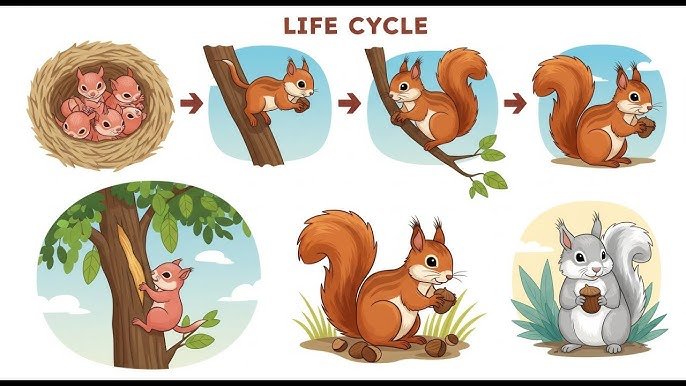
Newborn squirrels are born blind, hairless, and completely dependent on their mother. At this stage, they’re about the size of a human thumb. The mother provides constant warmth and nurses them for several weeks. During the first month, the babies remain hidden deep inside the nest.
Growth Milestones
- 3–4 weeks: Thin fur begins to appear.
- 4–5 weeks: Eyes open for the first time.
- 6–7 weeks: Baby teeth emerge, and they begin tasting solid foods.
- 8–10 weeks: They are weaned but still rely on the nest for protection.
- 12–14 weeks: Most juveniles leave the nest and start exploring.
Diagram of Development
- Birth: Hairless, closed eyes
- 4 weeks: Fur growth, eyes still closed
- 6 weeks: Eyes open, begin to chew food
- 10 weeks: Weaned, moving around
- 14 weeks: Independent, climbing trees
This timeline makes it clear why you rarely see baby squirrels in the open before midsummer. They stay tucked away until strong enough to survive outside.
When Do Different Squirrel Species Have Babies?
While the general pattern is similar, each species has unique breeding habits.
Eastern Gray Squirrels
- Breeding months: January–February and June–July
- Gestation: About 44 days
- Litter size: 2–6 babies
Gray squirrels are the most widespread in North America and the ones you’re most likely to spot in city parks. Their two-litter cycle is reliable, especially where food is plentiful.
Red Squirrels
- Breeding months: March–April and July–August
- Gestation: 35–38 days
- Litter size: 3–7 babies
Red squirrels are more territorial and aggressive than gray squirrels. They often rely on conifer seeds, which influence how often they reproduce.
Fox Squirrels
- Breeding months: December–January and June–July
- Gestation: 44–45 days
- Litter size: 2–4 babies
Fox squirrels are slightly larger and prefer open woods. Their breeding season begins earlier in winter than that of gray squirrels.
Ground Squirrels
Ground squirrels differ from tree squirrels. They usually breed once a year right after hibernation ends, typically in early spring. Because of the short warm season, they don’t have time for a second litter.
Comparison Table
| Species | Breeding Months | Litters per Year | Litter Size |
| Eastern Gray | Jan–Feb, Jun–Jul | 2 | 2–6 |
| Red | Mar–Apr, Jul–Aug | 2 | 3–7 |
| Fox | Dec–Jan, Jun–Jul | 2 | 2–4 |
| Ground | Mar–Apr | 1 | 5–8 |
Where Do Squirrels Have Their Babies?
Nesting Habits
Squirrels use two main nesting strategies:
- Dreys: Large ball-shaped nests made of leaves and twigs, usually built high in tree branches.
- Tree cavities: Natural holes or abandoned woodpecker nests inside trees.
Tree cavities are safer because they provide protection from predators and harsh weather. That’s why mothers often prefer them for raising newborns.
Urban vs. Wild Nesting
In rural areas, squirrels stick to trees. In cities, however, they adapt quickly. Attics, sheds, and chimneys can become warm, sheltered nesting spots. This explains why homeowners often notice unusual noises in the attic during spring and late summer—right when mothers are raising litters.
Why Knowing When Squirrels Have Babies Matters
Understanding squirrel reproduction isn’t just trivia. It has practical and ethical importance.
For Wildlife Enthusiasts
Knowing when squirrels give birth helps you identify when to look for playful juveniles outside the nest. Observing them responsibly means keeping distance and avoiding unnecessary interference. A favorite activity for many nature watchers is noting the first time a young squirrel clumsily attempts to climb down a tree.
For Homeowners
Baby squirrel season often coincides with increased complaints about attic activity. Removing a mother squirrel without realizing she has babies can be tragic. The young won’t survive without her. That’s why humane wildlife control specialists often schedule removal after the babies are old enough to leave on their own.
Some prevention tips include:
- Seal potential entry holes before breeding season.
- Trim tree branches away from roofs.
- Use chimney caps and vent covers.
- Call licensed professionals for ethical removal.
Frequently Asked Questions about Squirrels Having Babies
Do squirrels mate for life?
No. They are not monogamous. Males compete for females, and mating often involves several partners.
How long do young squirrels remain with their mother?
Usually about 10–12 weeks, though sometimes longer if food is scarce.
What actions should you take if you come across an infant squirrel?
If it looks healthy, wait and watch.The likely presence of the mother suggests she will come back soon. Only contact wildlife rehabilitation centers if the baby appears injured or abandoned.
How many babies can a squirrel have in one year?
Depending on the species and food supply, a mother may raise between 2 and 14 babies annually, usually spread over one or two litters.
Conclusion
Squirrels follow a fascinating reproductive rhythm that blends with the seasons. Most tree squirrels give birth twice per year, first in spring and again in late summer. Ground squirrels, with their shorter activity window, usually produce one litter annually. From blind, helpless newborns to daring juveniles leaping from branch to branch, their development is both delicate and remarkable.
For nature lovers, understanding these cycles deepens your appreciation of wildlife. For homeowners, it provides the knowledge needed to protect your space while respecting the life of these energetic creatures.
So the next time you hear chatter in the treetops or notice a furry visitor in your attic, remember: it might just be part of the natural cycle of squirrel family life.








Leave a Reply